
From December 14 to 18, President Wang Fazhou of WUT led a delegation on a visit to Malaysia. The delegation visited Universiti Teknologi Malaysia (UTM), University of Malaya (UM), Kuala Lumpur University of Science and Technology (KLUST), and Huawei Malaysia Branch. The delegation also paid a call on the Embassy of the People's Republic of China in Malaysia. This visit aims to promote high-quality educational and technological cooperation as well as people-to-people exchanges with leading universities and institutions in Malaysia, serve the joint construction of the Belt and Road Initiative and the China-Malaysia Community with a Shared Future, and expand the university’s global engagement.
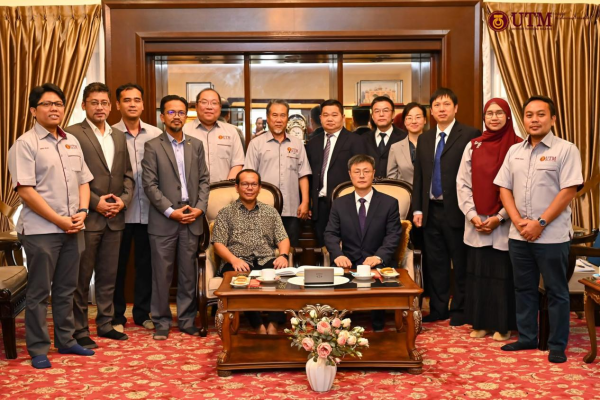
At UTM, President Wang Fazhou held talks with UTM's Vice-Chancellor, Prof. Mohd Shafry. He introduced the university's progress in talent cultivation, discipline development, scientific research achievements, and educational internationalization, with a focus on the university's innovative and integrated development led by the distinctive advantages of the "three key industry-oriented disciplines". President Wang stated that UTM is an important cooperative partner of Wuhan University of Technology, with a profound foundation and broad prospects for cooperation. He expressed the hope of further deepening scientific research cooperation and talent cultivation in engineering-related fields on the basis of existing cooperation in intelligent manufacturing, intelligent transportation, shipping safety, and other areas, and promoting the joint establishment of an advanced engineering and technology research center. Prof. Mohd Shafry expressed his expectation to jointly build the research center with Wuhan University of Technology, advance scientific research cooperation and young talent cultivation, and provide practical solutions for global sustainable development. The two parties signed and exchanged Memorandum of Understanding (MoU). During the visit, President Wang also visited the laboratory of UTM's Maritime Technology Center.
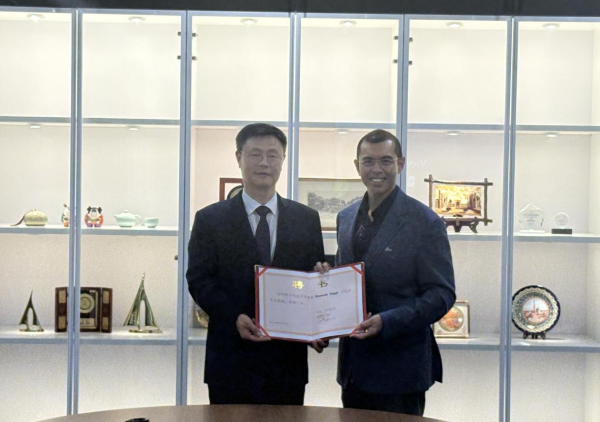
At the UM, President Wang Fazhou met with UM's Executive President, Prof. Ramesh Singh, signed an MoU, and awarded Prof. Ramesh Singh the letter of appointment as a visiting professor. President Wang introduced the university's development characteristics of integrating high-quality resources from the "three major industries" (building materials and construction, transportation, and automobiles) for innovative development. He emphasized that the university attaches great importance to cooperation and exchanges with UM, and hopes the two universities will expand cooperation areas, innovate cooperation mechanisms, strengthen scientific research cooperation and joint talent cultivation focusing on global issues such as energy transition, and contribute to promoting global sustainable development. Prof. Ramesh Singh noted that UM has long-term accumulation in fields such as new energy materials, data science, and artificial intelligence, and is willing to actively promote substantive exchanges between the two parties in relevant areas, looking forward to fruitful results from the cooperation at an early date.
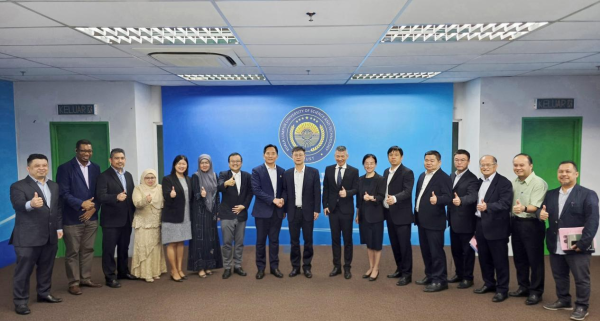
At the KLUST, Wang Fazhou held discussions with the university’s Board Chairman, Tan Hsiao Yun, and Executive President, Prof. David Ngo Chek Ling. President Wang outlined WUT's latest advancements in implementing its global strategy and promoting high-level internationalization. He also congratulated KLUST on its recent renaming and elevation to university status. Tan Hsiao Yun introduced KLUST’s history and distinctive features, stating that WUT is actively integrating into the Belt and Road Initiative and aims to become an educational bridge between China and ASEAN countries. Prof. Ngo noted that KLUSE has entered a new phase of development, is aligning itself with the talent needs of the digital era, and is transforming into an applied research university, pledging full support for bilateral cooperation. The two sides reached an agreement to innovate cooperation mechanisms through a “college-within-university” model, broaden cooperation areas, raise cooperation levels, and inject new momentum into deepening China-Malaysia educational exchanges and serving the socio-economic development of both countries.
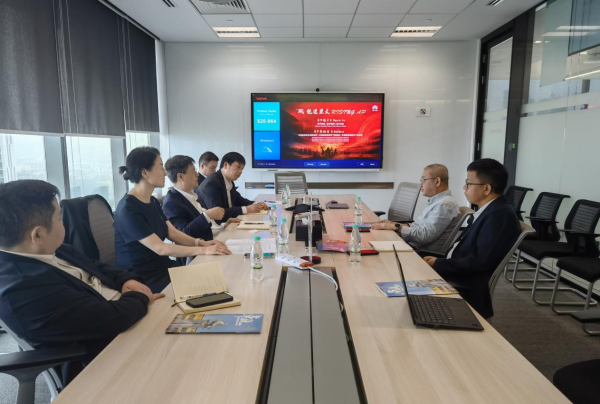
At Huawei Malaysia Branch, Wang Fazhou held talks with company executives. He pointed out that WUT’s existing deep cooperation with Huawei in China provides a solid foundation for exchanges with the Malaysian branch. The two parties reached an agreement to center on “internationalized university-enterprise cooperation,” jointly establish or empower an “ICT Academy” in Malaysia, implement a customized Malaysian “Chinese + major” training program, and carry out industrial-technology collaboration and regional platform building.
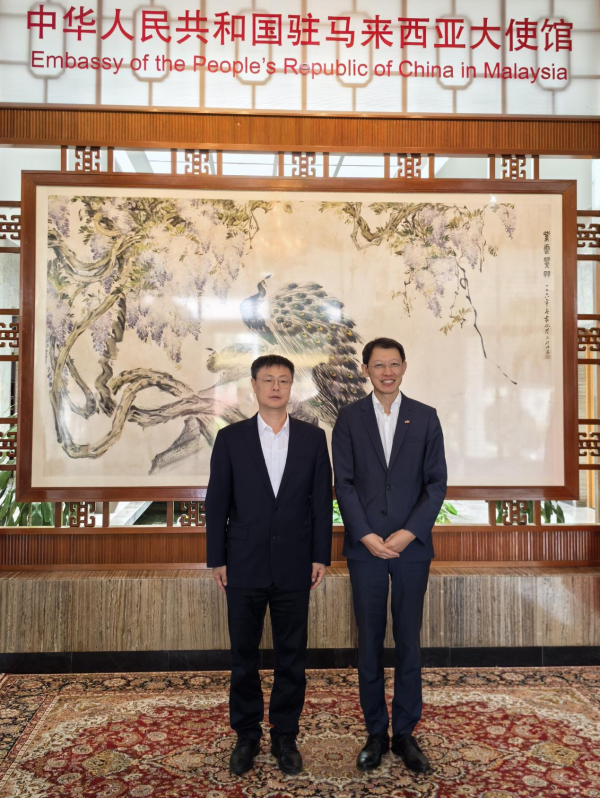
In Kuala Lumpur, Wang Fazhou visited the Chinese Embassy in Malaysia and held discussions with Counselor Zhao Changtao. Zhao spoke highly of WUT’s positive role in promoting China-Malaysia educational cooperation and expressed the hope that WUT will leverage its own strengths and characteristics to further strengthen exchanges and cooperation with Malaysian institutions and continue to contribute to China-Malaysia people-to-people exchanges. The two sides conducted in-depth discussions on advancing cooperation in education, science and technology.
In accordance with the 2025 work plan of WUT's Education Opening-Up Leading Group, to implement the consensus reached during the April 2025 summit between the Chinese and Malaysian heads of state and the call by China’s Minister of Education, Huai Jinping, to comprehensively upgrade China-Malaysia educational cooperation, and under the strategic deployment of WUT’s “4310” internationalization action plan, this visit and exchange program to Malaysia was organized. It is of great significance for further promoting all-around, wide-ranging and multi-level exchanges and cooperation between WUT and relevant Malaysian institutions.
The delegation included leaders from the Office of Development Planning and Discipline Construction, the Undergraduate School, the International Office, and the School of Mechatronics Engineering.
Rewritten by: Lin Qiaochu, Xu Hanyue
Edited by: Li Huihui, Li Tiantian
Source: International Office of WUT
|
|