
Recently, the research team led by Professor Xia Jianlong of our university has made new progress in the field of organic optoelectronic materials. The relevant findings, entitled “Controlling chromophore assembly and coupling via carbon nanohoops enables singlet fission at interchromophore distances up to 16 Å”, have been published in the journal Nature Chemistry. The State Key Laboratory of Advanced Technology For Materials Synthesis and Processing, the School of Chemistry, Chemical Engineering and Life Science, and the International School of Materials Science and Engineering of Wuhan University of Technology (WUT) are the corresponding author affiliations, with Professor Xia Jianlong as the sole corresponding author.
The multiple exciton effect (also known as singlet fission) of organic semiconductor materials refers to an exciton multiplication process in which a material absorbs a photon to generate a singlet exciton (S1) and then splits it into two triplet excitons (2×T1). Materials with the multiple exciton effect are expected to increase the theoretical efficiency limit of single-junction solar cells from 33% to 45%.
The team leveraged the unique rigid structure of carbon nanohoops to regulate the assembly and electronic coupling of functional building blocks. The study found that the material still exhibited a fast and efficient multiple exciton effect when the distance between functional building blocks reaches approximately 16 Å. This research provides a new approach for the development of organic semiconductor materials with the multiple exciton effect.
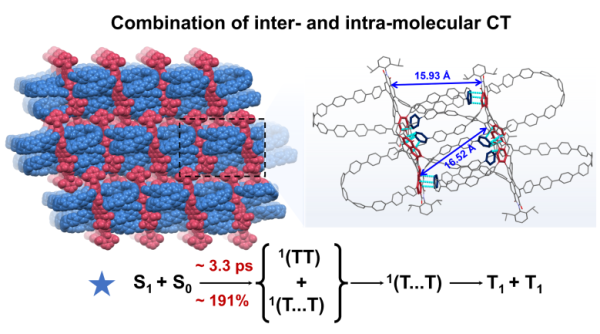
Figure 1 Regulation of coupling between multiple exciton effect functional building blocks based on carbon nanohoops
The research team led by Professor Xia Jianlong has long focused on the design and synthesis of organic/polymer functional materials and exciton dynamics. In recent years, the team has achieved a series of innovative results in the field of organic semiconductor materials with the multiple exciton effect (Angew. Chem. Int. Ed. 2025, 137, e202417362; Angew. Chem. Int. Ed. 2024, 63, e202400941; J. Am. Chem. Soc, 2024, 146, 13326-13335).
Written by: Wu Di
Rewritten by: Lin Qiaochu
Edited by: Li Huihui, Li Tiantian
Source: State Key Laboratory of Advanced Technology For Materials Synthesis and Processing, School of Chemistry, Chemical Engineering and Life Science, International School of Materials Science and Engineering
|
|